
What Do Your Brand Colors Say?
Learn how color psychology in branding influences customer perception and how to choose a strategic brand color palette that builds trust and attracts the right audience.
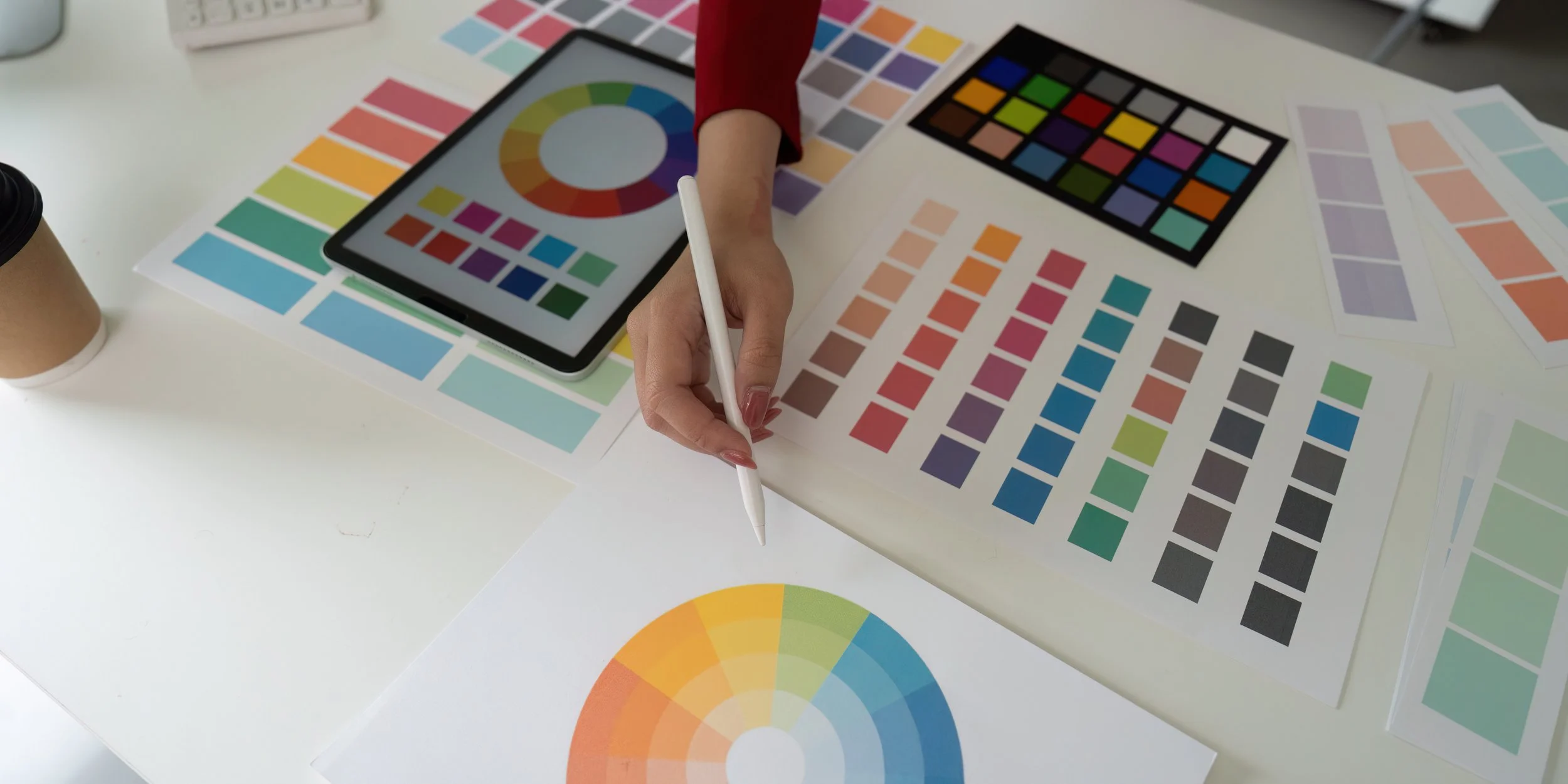
Your brand colors speak before your words do.
The Real Impact of Color Psychology in Branding
I’ve been fascinated with color since I was a kid. Most of my free time went into crayons and coloring books. When I would paint, I got more joy out of mixing colors than creating the actual artwork. Even as an adult, I still love color. I don’t want to say I’m obsessed, but… you get it.
Color is everywhere in our daily lives, and it affects us way more than we realize.
Color psychology, especially in when it comes to branding, looks at how color influences emotion, perception and buying behavior. In marketing research, people tend to form quick impressions, and color plays a big role in that.
One widely cited finding is that people make up their minds within about 90 seconds of their first interaction with a brand, and roughly 62% to 90% of that assessment can be based on color alone.*
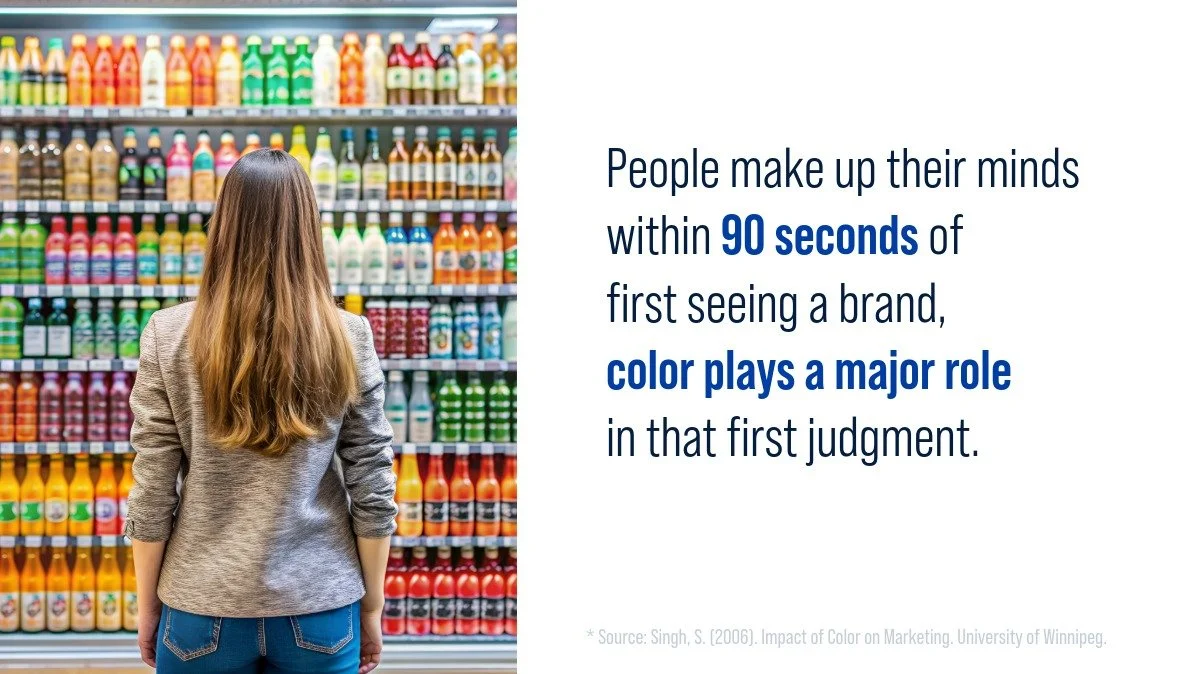
First impressions happen fast, and color does a lot of the talking.
That’s why your brand color palette should be a strategic decision, not just a list of colors you like.
Color shapes how people feel about your brand
Your colors can attract the right audience or push them away. They can instantly communicate your personality, or create mixed signals.
Before choosing your palette, ask yourself:
• What emotions do I want people to feel?
• What is the personality of my brand?
• Do my colors support or fight against my message?
• What colors are common in my industry?
• How do I stand out while still feeling “right” for my audience?
Your palette is doing a lot more heavy lifting than most people realize. A strong brand color strategy helps your audience understand your brand faster and builds trust from the first impression.
Here’s an example: Stop-N-Store
When we worked on a brand identity design and rebrand for Stop-N-Store, a self-storage facility, color was one of the first things we had to rethink. Their original branding used red as the dominant color because of the word “Stop” in the name (and the obvious stop sign connection).
The issue is that red can come across as intense, alarming, or overly emotional. For a storage company, it might not seem like brand color matters, but it absolutely does. People choose storage when they’re already in a stressful moment (moving, renovations, life changes). Their goal was to build trust and reassure customers that their belongings would be safe in a clean, reliable facility with modern security upgrades. A bold red base was sending the opposite vibe.

Same brand, different message: shifting red from primary to accent makes the brand feel more secure and modern.
Red has benefits, don’t get me wrong. Instead of removing it completely, we shifted red into an accent color. Then we introduced neutral shades like gray and silver to create a stronger foundation that felt more secure, stable and modern. Red still had a place in the palette, but it became a highlight instead of the main voice.
That one change helped the brand better match the feeling they wanted customers to have. We also gave the logo a much needed update, but that’s a story for another day.
Your palette is part of your message, not just the packaging.
Why this matters for your brand
Color is not decoration. It’s communication.
Your palette tells people who you are before they read a single word. It can suggest luxury, approachability, energy, calm, tradition, or innovation. It can make your brand feel trustworthy or chaotic. It can help you stand out, or blend in. Choosing the right brand color palette is one of the most effective ways to shape how people perceive your business.
When your colors match your message, everything gets easier. Your website, packaging, social media, and logo start to feel more cohesive and intentional.
Also worth noting: color associations can vary by context and culture, so the “best” palette depends on who you’re trying to reach and where.
Final thoughts
Before you choose your brand colors, think about the meaning of colors in branding and the message you want to send. Just because you love a color doesn’t mean it’s the best choice for your business.
Color psychology is one of the simplest ways to strengthen your brand. When you choose with intention, your audience can feel it.
If you want help building a palette that fits your brand’s personality and goals, I’m always happy to help.
* Source: Singh, S. (2006). Impact of Color on Marketing. University of Winnipeg. https://newion.uwinnipeg.ca/~ssingh5/x/color.pdf